PLACE DE LA CONCORDE

CALL FOR PROJECTS FOR THE REDEVELOPMENT OF PLACE DE LA CONCORDE

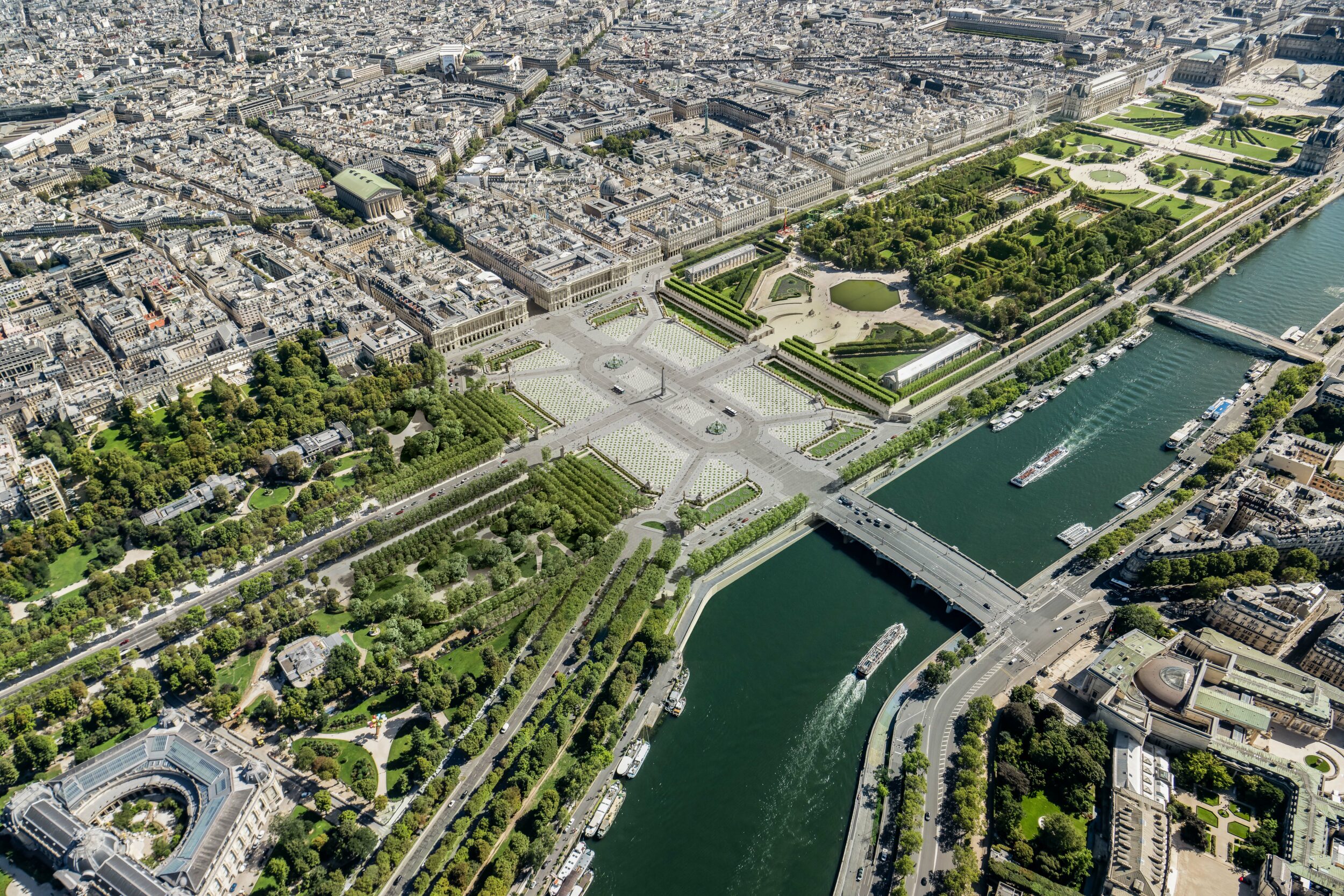
Place de la Concorde is one of the most symbolic spaces in Paris, located at the intersection of major urban axes, between the Tuileries Garden, the Champs-Élysées, and the Seine. It embodies both republican monumentality and the complexity of a structuring urban space.

Designed by the architect Jacques-Ange Gabriel at the end of the eighteenth century and later redesigned by Jacques Hittorf, Place de la Concorde expresses both the centrality of monarchical power and an openness to the world. The square has endured through the centuries, although not without undergoing successive transformations, such as the infilling of the moats, which paved the way for the dominance of the automobile in the twentieth century. Today, the square’s original architectural language has almost entirely disappeared, its symbolic dimensions having been diminished to make way for a purely functional role: that of a major central Parisian crossroads.

In 2024, the City of Paris initiated a redevelopment process for the square, with the ambition of restoring the richness of its historic composition, adapting its uses to contemporary mobility patterns, and fully integrating environmental, urban, and heritage-related challenges.

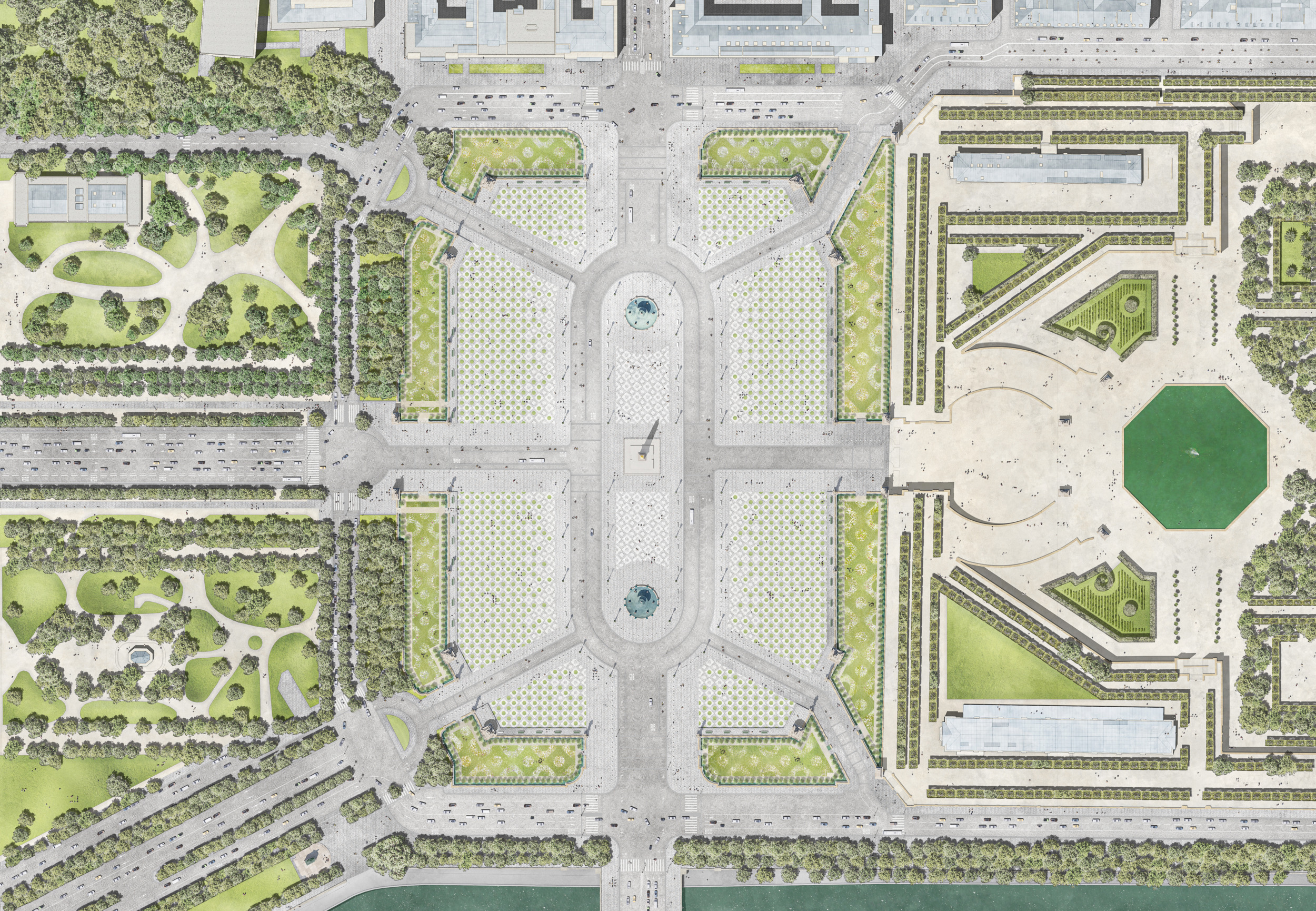
Chatillon Architectes, alongside Snøhetta, Louis Benech, TN+, In Situ, Grue, Franck Boutté Consultants, Saguez & Partners, Quadrim, Inddigo, Egis, and Elioth, proposed a project aimed at restoring the harmony of the square in all its dimensions.
© Chatillon Architectes

The site analysis revealed a series of imbalances. Today, the square is dominated by automobile traffic, with a flow organisation that fragments the space and undermines the legibility of its overall composition.

This configuration significantly diminishes the quality of use: pedestrians are relegated to the margins, crossings are long and poorly legible, and spaces for rest or social interaction are almost entirely absent. Moreover, heat island effects, pervasive mineral surfaces, low biodiversity, and the lack of shade further exacerbate users discomfort during the summer months.

The project aimed to restore the cultural, social, and political significance of the square while meeting contemporary requirements: improving the clarity of the public space, providing comfortable pedestrian routes, strengthening the place of nature in the city, and enabling effective management of both everyday and exceptional uses.

© Chatillon Architectes

La proposition s’appuie sur une relecture sensible du projet initial de Gabriel et d’Hittorff, sans jamais chercher la citation littérale. Le parti pris était de révéler la composition originale tout en l’adaptant aux usages et aux défis du XXIe siècle.

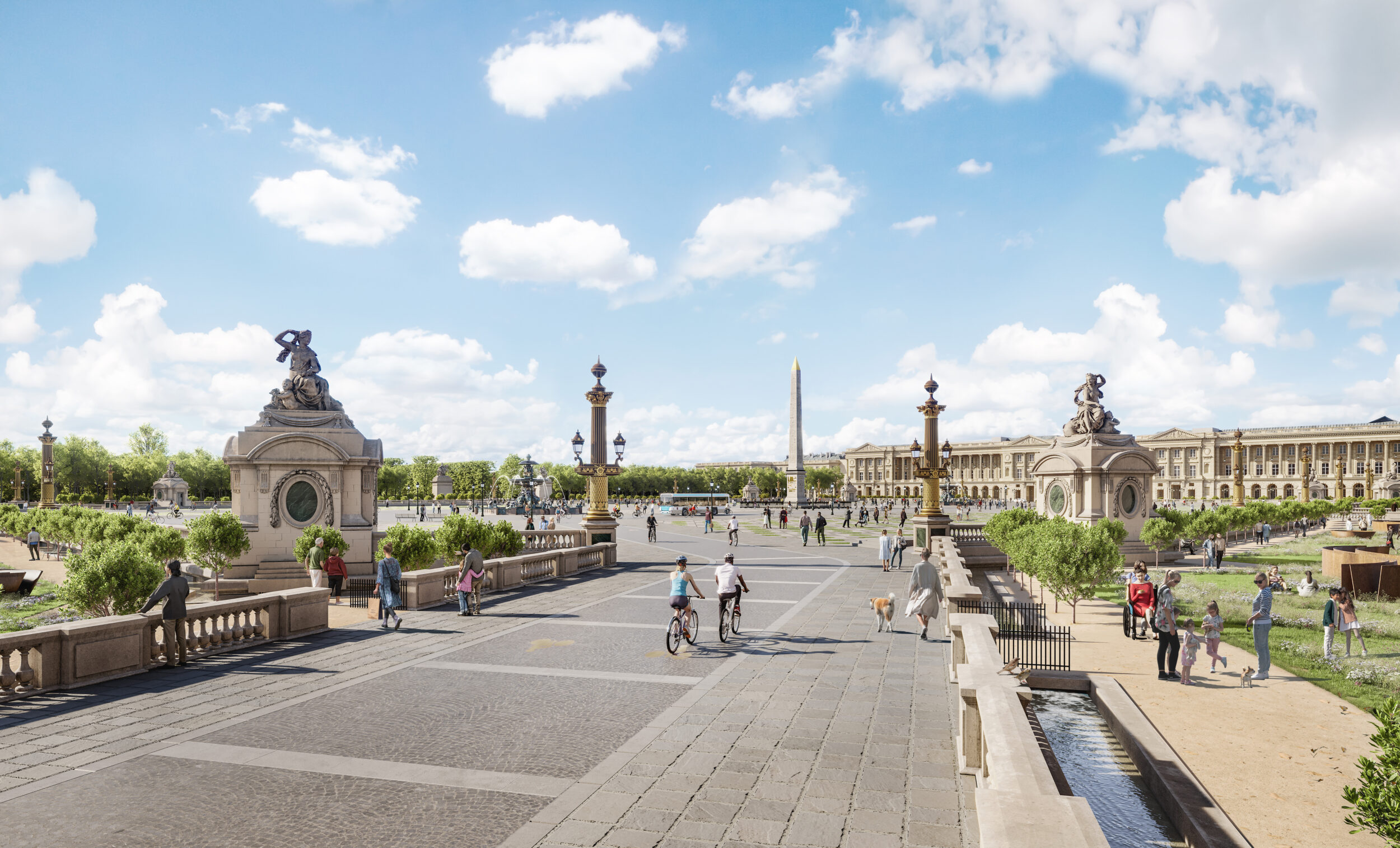
The traffic plan proposes restoring the peripheral side streets to reorganize motorized traffic flows and free up the center of the square, restoring the central space to its role as a welcoming place to linger, limiting its use to soft modes of transport (buses, taxis, bicycles, etc.).

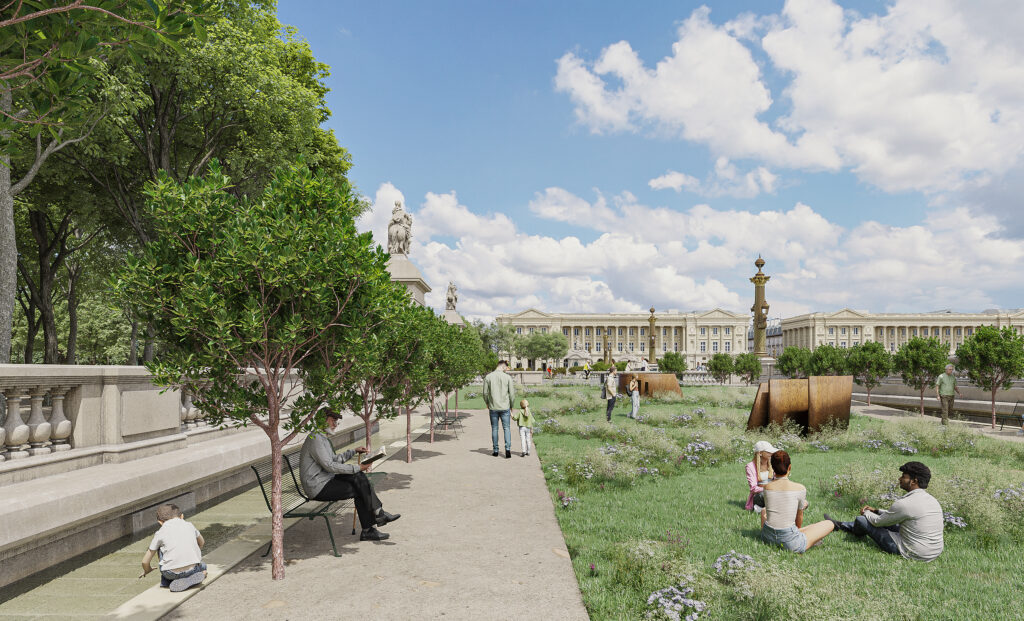
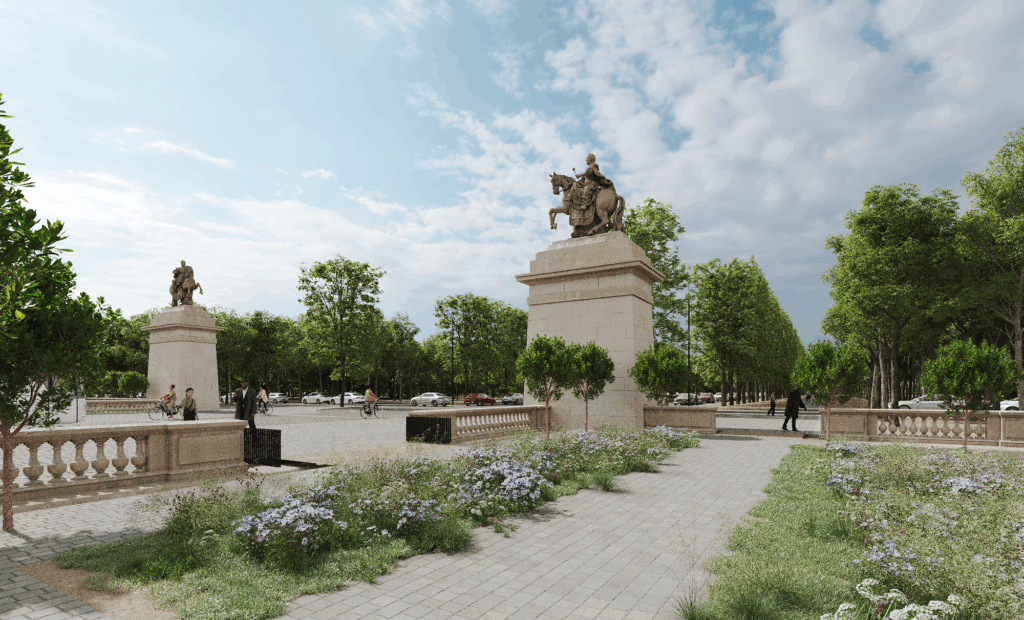
Taking on a contemporary reinterpretation of the original ditches, the new ones, lowered by 50 cm, planted with vegetation, passable, and equipped for public use (seating, shade, integrated furniture), allow the creation of new landscaped spaces, on the scale of Parisian squares.

Flower beds and ditches free up space that is conducive to multiple uses, including comfortable daily commutes, leisurely strolls, and occasional events. The creation of a unique range of furniture, inspired by Hittorf's historical motifs, encourages users to spend more time in the square. The square's smooth surface allows people with reduced mobility and families with strollers to walk around the square without any constraints.

The developments incorporate sustainable resource management: living reconstituted soil, climate-change-resistant plantings, rainwater harvesting, and reuse of existing structures and materials. The continuity of the soil, the unity of the architectural vocabulary, and the discretion of the technical systems made it possible to recapture the spirit of a large urban landscape that is open, legible, and inhabited.

Location
Paris, 8th arrondissement
Project type
Competition
Program
Culture
Team
Chatillon Architectes, Snohetta, TN+, In Situ, Grue, Franck Boutté Consultants, Saguez & Partners, Quadrim, Inddigo, Egis et Elioth
Competition project
2024 – 2025